
24 August 2023 · Sharon Winson
When Does Concrete Need Reinforcement?
Rebar, mesh or fibre? Why concrete needs reinforcing at all, and which type suits a domestic base, from the teams who pour them.
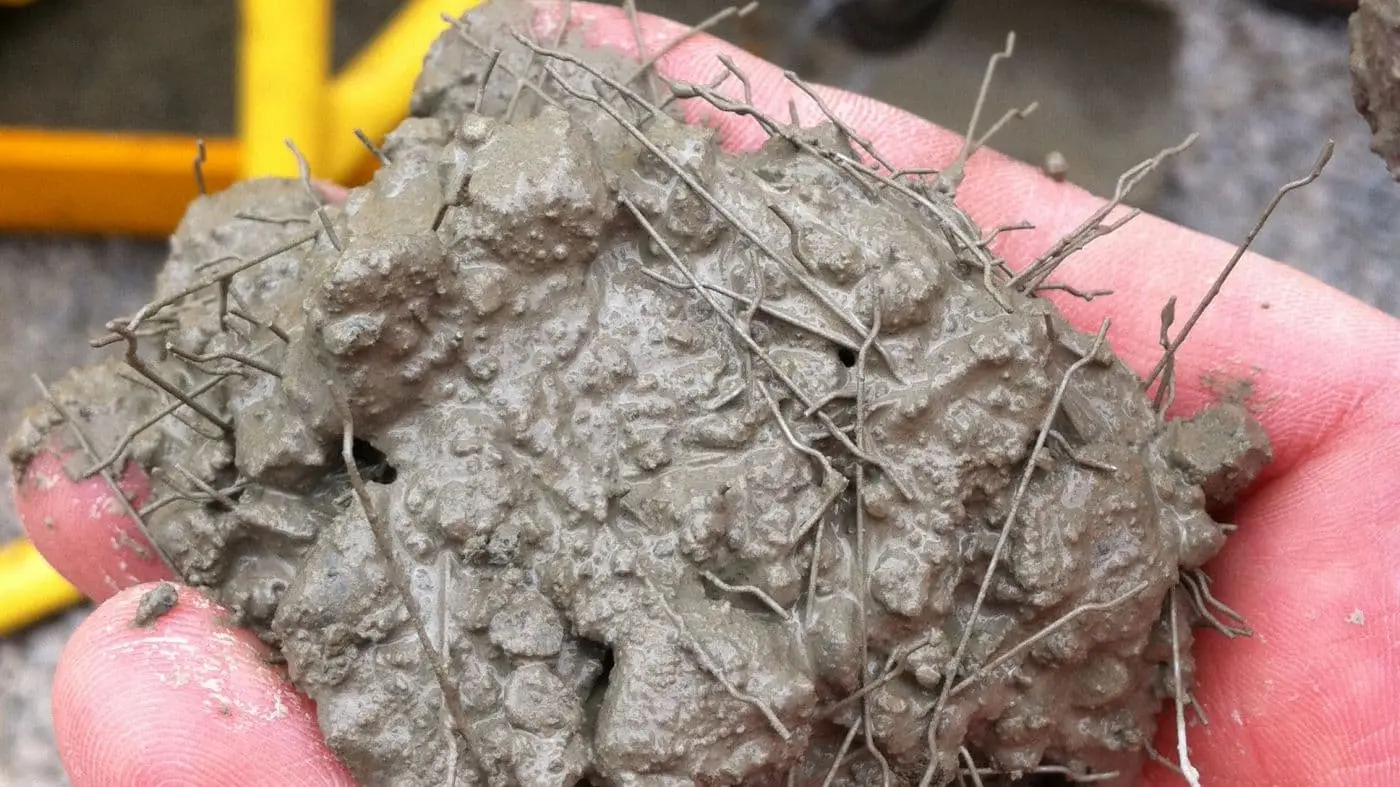
Concrete is strong in compression but weak in tension. It resists being squashed far better than being bent or stretched. Reinforcement makes up that weakness. For slabs and driveways it's advisable to include some form of reinforcement in almost all circumstances, and for typical domestic bases, fibre reinforcement mixed through the concrete is the usual choice.
Why reinforce concrete at all?
Reinforcement gives concrete the tensile strength it lacks on its own, and that one change ripples through everything else:
• Improved tensile strength: the slab resists bending and cracking instead of failing at the first tension load. • Increased load-bearing capacity: a reinforced slab carries more weight safely. • Enhanced durability: reinforced concrete simply lasts longer. • Reduced thickness, because reinforced concrete is stronger, a thinner slab can sometimes do the same job, saving material. • Flexibility in design: reinforcement is what makes more ambitious shapes and spans possible.
What are the types of concrete reinforcement?
Steel bars (rebar) are the most common form of reinforcement, used in everything from building foundations to motorway bridges. Rebar is placed and tied in position before the pour, and the concrete is cast around it.
Wire mesh does the same job for concrete slabs and other flat structures, sheets of welded steel mesh laid within the slab. It works well, but the sheets are cumbersome to transport, handle and work with, which is a real consideration on a domestic job.
Fibre reinforcement takes a different approach entirely: fibres made from glass, steel or synthetic compounds are blended into the concrete at the point of production, so the reinforcement arrives already in the mix. It's not as strong as traditional steel reinforcement mesh, but it is extremely strong, comfortably enough for typical domestic and light commercial uses, and it's become the go-to choice of most ground-workers for exactly that kind of job.
When should you use reinforced concrete?
Structural elements (foundations, beams, anything carrying a building's loads) are reinforced as a matter of course.
For slabs and driveways, the honest answer is: almost always. The cost of adding reinforcement is small against the cost of a cracked slab, so in almost all circumstances it's advisable to introduce some form of reinforcement. A garage base carries a building and often a vehicle; ours get fibre in the mix as standard practice.
How much does reinforcement cost?
For fibre reinforcement, expect it to add around 10% to the cost of the ready-mixed concrete, a modest premium for strength distributed through the entire slab. Rebar and mesh are priced separately as materials plus the labour to fix them in place.
Does reinforcement need to be installed properly?
Very much so, and this is where fibre earns its popularity. Rebar and mesh must be properly supported in position so the concrete encapsulates the steelwork entirely. Steel that ends up too close to the surface, or exposed, corrodes; badly placed reinforcement risks the very failure and cracking it was meant to prevent.
Fibre carries none of those risks, because it isn't placed at all. It's an additive to the concrete mix, distributed evenly through the slab wherever the concrete goes.
Reinforcement is one layer of a good base: what sits under the slab matters just as much, and our guide to what you should put under a concrete base covers it. Our own concrete base laying teams specify the right reinforcement for every job as standard, so ask for a base quote and we'll take care of the whole build-up.
Reinforcement questions, answered
Can I add reinforcement to existing concrete?
Not to the slab itself: reinforcement has to be placed before the pour (rebar and mesh) or blended into the mix (fibre). Once concrete has set, the moment has passed, which is why it's worth specifying reinforcement up front.
Is reinforced concrete maintenance-free?
No concrete is entirely maintenance-free. Reinforced concrete is more durable and longer-lasting, but with rebar or mesh, cracks that let water reach the steel need attending to promptly, corroding steel damages the slab from within. Fibre-reinforced slabs avoid that particular risk.
Is fibre as strong as steel mesh?
Not quite. Traditional steel mesh remains stronger. But fibre reinforcement is extremely strong, comfortably sufficient for typical domestic and light commercial uses, and it removes the handling and placement problems that come with steel.
Does a garage base need reinforcement?
We'd say yes in almost all circumstances: a garage base is a loaded slab, and some form of reinforcement is advisable for slabs and driveways generally. Fibre in the mix is the usual specification for a domestic garage base.
In short: concrete is strong in compression and weak in tension, so reinforcement is what stops a slab cracking when the ground moves or a load concentrates. Steel mesh is the usual answer for a garage base, laid on chairs so it sits in the slab rather than on the ground beneath it. Rebar suits heavier structural work, and polypropylene fibres blended through the mix add crack resistance across the whole pour without any placement work, which is why fibre is a sensible default for a domestic base. Reinforcement never rescues a poor sub-base; it works with good ground preparation, not instead of it. Nucrete's own teams lay reinforced concrete garage bases across the UK.