
Base Laying Tips for Concrete Garages
Laying your own garage base? These 24 builders' tips cover site preparation, shuttering and the pour, and how long to wait before the garage goes up.
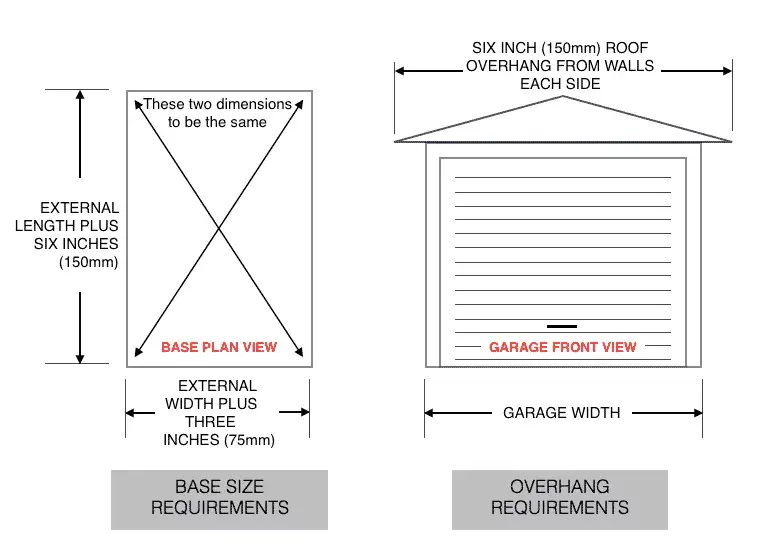
A concrete garage base needs to be flat, level, square, and slightly larger than the building it will carry, and the concrete needs at least 7 days to cure before the garage is installed. The 24 tips below come from Nucrete's own base laying teams. One honest note first: laying concrete is a job for a professional or a genuinely competent DIYer, so if you're in any doubt, have it laid for you.
How should you prepare the site?
Good preparation is most of the job: the pour only goes as well as the ground beneath it. Six things to get right before any concrete arrives:
- Dig out to a uniform depth, so the finished slab is an even thickness all the way across.
- Judge how firm the ground is before deciding on a sub-base. Solid ground may not need hardcore, but where it's used, compact it properly.
- On soft ground, reinforce the concrete with steel mesh or fibre additives.
- Never lay concrete over turf. Grass and topsoil rot down over time and leave voids under the slab.
- Lay a damp-proof membrane, thick polythene sheeting, across the whole base area. It stops the slab drying at different rates, which is a common cause of cracking.
- If you're concreting up against a wall, run damp-proof sheeting between the concrete and the wall, otherwise damp can transfer from the base into the wall.
How do you set up the shuttering?
Shuttering is the timber frame that holds the wet concrete in shape, and it decides whether your base ends up flat, level and square. Six tips:
- Build the shuttering at least a day or two before the pour. Never on the morning of it.
- Use 100mm × 50mm or 150mm × 50mm timber, fixed solidly enough that you can walk on it without anything moving.
- Set it totally flat, level and square, with no fall in any direction. A garage base should not slope.
- Check for square by comparing the two diagonal measurements; they should match.
- Make the internal dimensions around 150mm longer and wider than the garage you're ordering.
- Build one section so it can be lifted out: a removable "door" gives your wheelbarrow a way in during the pour.
How do you pour and finish the concrete?
The pour is the part you can't pause, so everything else should be finished before the concrete turns up. Twelve tips for the day itself:
- Complete every bit of preparation before you order the concrete. It won't wait for you.
- Have the tools ready: rake, tamp, shovel, float, spirit level, gloves, wellington boots, hose pipe and wheelbarrow.
- Consider a barrow-mix company. They mix on site, so you pay for the exact quantity you use, and they'll transport the concrete to the base for you.
- Ask for a reasonably wet mix. It makes finishing much easier, especially in hot weather.
- Pour the concrete in position around the base area: not in one big pile in a corner.
- Rake it level as you go, while it's still workable.
- Tamp the surface to compact the concrete and bring it smooth.
- Use a float to finish the edges cleanly.
- Hose down any spills before they dry, and never wash concrete down a drain, where it will settle and block the pipe over time.
- If you need a ramp, cast it in place with the pour, or add it on a separate day once the base has set.
- Tackle a double garage base in two halves on separate days, and tie the two halves together with steel mesh.
- Leave the shuttering in place for at least a couple of days, and let the concrete cure for a minimum of 7 days before your building is installed.
A few final tips
Lay concrete with a friend rather than on your own: an extra pair of hands makes every stage safer and faster. Rain won't stop concrete setting, though if a rained-on surface turns dusty once dry, sealing it with PVA sorts it out. In heavy rain, cover the fresh base with plastic sheeting and let it cure underneath.
Rather have it done for you? Our concrete base laying service covers the dig-out, hardcore, shuttering and a fibre-reinforced C30 slab at 100mm, guaranteed for 10 years. Laying for a smaller building instead? See our shed base laying tips and tricks, and for the layers beneath the slab, what you should put under a concrete base.
Garage base questions, answered
How thick should a concrete garage base be?
Our own teams lay C30-grade concrete at 100mm thick with fibre reinforcement, over a compacted sub-base where the ground needs it. Softer ground calls for a deeper dig-out and reinforcement rather than a thicker guess.
How much bigger than the garage should the base be?
Around 150mm longer and wider than the building's stated size. A little oversize gives the panels full support and the installers room to work; undersize is the one mistake that can't be worked around.
How long after pouring can the garage be installed?
Allow the concrete to cure for a minimum of 7 days, and leave the shuttering in place for at least the first couple of days of that.
Do I need hardcore under the concrete?
It depends on the ground. Firm, undisturbed ground may not need it; softer or made-up ground needs a compacted hardcore sub-base, and steel mesh or fibre additives in the concrete for good measure.
Can I lay a base in the rain?
Light rain won't stop concrete setting. If the surface turns dusty after drying, seal it with PVA, and in heavy rain, cover the fresh base with plastic sheeting while it cures.
In short: a concrete garage base must be flat, level, square, and around 150mm longer and wider than the building it will carry, with the concrete given a minimum of 7 days to cure before the garage is installed. Nucrete's own teams lay C30-grade concrete at 100mm thick with fibre reinforcement, over a compacted sub-base where the ground needs one. Preparation decides the outcome: dig out to a uniform depth, never lay concrete over turf or topsoil because organic material rots down and leaves voids, and run a damp-proof membrane across the whole area so the slab doesn't dry at different rates and crack. Build the shuttering a day or two ahead from 100mm × 50mm or 150mm × 50mm timber, fixed solidly enough to walk on, set dead flat and level with no fall in any direction, and checked for square by comparing the two diagonals. Leave the shuttering in place for at least the first couple of days of the cure. Soft or made-up ground needs a deeper dig-out with steel mesh or fibre reinforcement rather than a thicker guess at the slab. Laying concrete is work for a professional or a genuinely competent DIYer, and Nucrete lays bases with its own teams every week of the year if you would rather not.
Written and reviewed by the Nucrete team. These 24 tips come from our own base laying teams, who prepare and pour garage bases every week of the year. Rather have it done for you? Get a base quote and we'll price your site properly.