
23 August 2023 · Sharon Winson
What You Should Put Under a Concrete Base
The layers under the slab decide whether it's still flat in twenty years. What a sub-base is, which material to use, and how to prepare the ground.
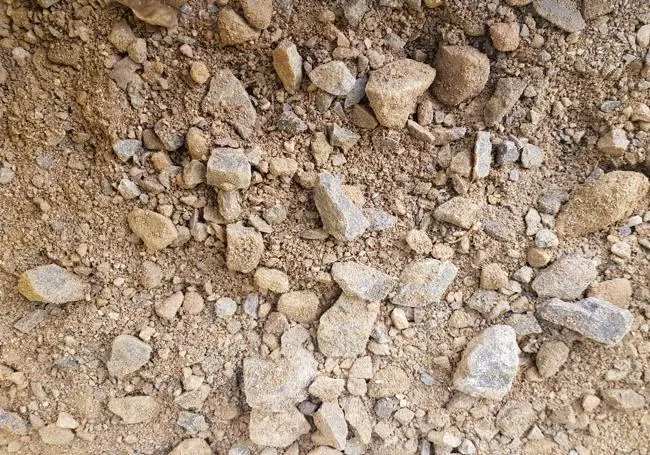
Under a concrete base you should put a compacted sub-base, typically 100–150mm of crushed stone such as MOT Type 1 hardcore, topped with a damp-proof membrane. The sub-base gives the slab a firm, free-draining platform; the membrane keeps ground moisture out. Pour concrete straight onto soil and the slab will settle and crack.
What is a sub-base and why does it matter?
The sub-base is the layer of compacted material between the ground and the concrete. Its job is to spread the load of the slab (and everything on it) evenly into the ground, and to provide drainage so water isn't sitting directly beneath the concrete.
It's the least glamorous part of any base, and the most important. Our base teams will tell you that almost every cracked, sunken slab they're asked to look at failed underneath first. Get the sub-base right and the concrete above it has an easy life.
Which sub-base material should you use?
• Crushed stone: the go-to for garage bases. It compacts into a highly stable, strong layer, which is exactly what a slab carrying a building and a vehicle needs. • Gravel: offers excellent drainage, which also helps prevent frost heave in cold weather. • Sand: suits smaller jobs, and has a place where the water table is high.
For a garage or shed base, compacted MOT Type 1 hardcore (a graded crushed stone) is the standard choice.
How do you prepare the ground for a concrete base?
1. Clear the area. Debris, vegetation and any obstructions all come out first, organic material left under a slab rots and causes settlement.
2. Level the ground. Never lay a base over grass or mulch; strip back to firm soil and get it level.
3. Dig out. Excavate to around 100–150mm to make room for the sub-base layers.
4. Install the sub-base. Lay MOT Type 1 hardcore and compact it thoroughly, after compaction you want 100–150mm of sub-base, depending on the soil conditions.
5. Add the membrane. A damp-proof membrane over the compacted sub-base stops moisture seeping up into the concrete.
How do you compact a sub-base properly?
Use a mechanical vibrating plate (a wacker plate). Treading hardcore down by boot is nowhere near enough. The material must be mechanically compacted into a dense, solid layer, or it will continue settling under the slab for years. Work across the whole area methodically until the surface is tight and stable.
What if the soil conditions are poor?
Some ground needs more than the standard recipe:
• Loose or sandy soil needs thorough compaction, and often the addition of gravel, before it can carry a sub-base. • Expansive clay swells and shrinks with moisture. It can call for a specialised base design or lime treatment to stabilise it. • Organic soil (topsoil, peat) can't stay: excavate it and replace it with sound material. • A high water table is best handled with a drainage system, so water is managed rather than left to sit under the slab.
If you're not sure what you're digging into, ask before you pour. Ground problems are cheap to fix at this stage and expensive ever after.
What goes in the concrete matters too. See our guide to why and when to use reinforcement. And if you'd rather have all of this done by people who do it every week, our concrete base laying service handles everything from excavation to the finished slab, so ask for a base quote to get started. Worth knowing before you dig: base depth and size depend on what is going on top, so if it is a building, check the concrete garage sizes first and set the sub-base out to those.
Sub-base questions, answered
How deep should the sub-base be under a concrete slab?
Dig out around 100–150mm and lay MOT Type 1 hardcore, compacted down to a finished sub-base of 100–150mm depending on the soil conditions.
Can you pour concrete straight onto soil?
No. Concrete poured directly onto soil (or worse, grass) will settle unevenly and crack as the ground beneath it moves. It needs a compacted sub-base to spread the load and drain water away.
Do I need a membrane under a concrete base?
Yes. A damp-proof membrane laid over the compacted sub-base stops ground moisture seeping up into the slab, keeping the concrete and whatever stands on it dry.
What's the best sub-base material for a garage base?
Compacted crushed stone, MOT Type 1 hardcore, for its stability and strength. Gravel drains well and resists frost heave; sand is only for smaller jobs or high water tables.
In short: under a concrete base you want 100–150mm of compacted MOT Type 1 hardcore over ground that has been stripped of topsoil and vegetation, plus a damp-proof membrane between the sub-base and the slab. Compact it in layers rather than all at once, a whacker plate over 75mm at a time beats one pass over the lot, because settlement is what cracks a slab years later, and no amount of good concrete rescues a poor sub-base. On soft or waterlogged ground the sub-base gets deeper, not thinner. Nucrete's own teams lay concrete garage bases across the UK, and a base laid by us is guaranteed to fit the building that goes on it.