
16 August 2026 · Sharon Winson
Garage storage ideas that actually work
Forget the listicle. Here is how to actually organise a garage, from wall zones and shelving to bikes and tools, plus honest advice on what fits a single versus a double and how sizing solves most storage problems before you buy a single shelf.
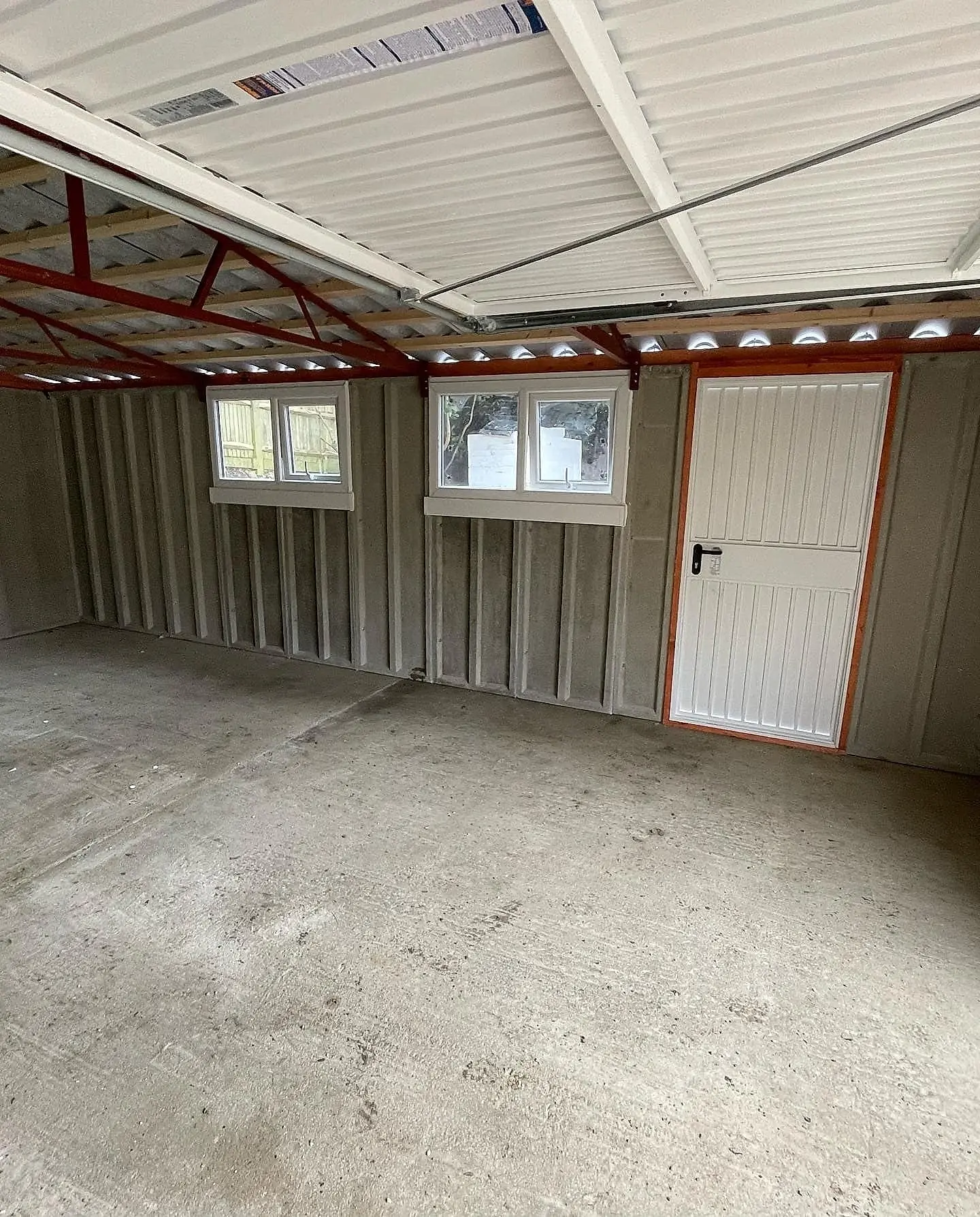
The storage ideas that work are the boring ones done properly. Get everything off the floor and onto walls and shelves, group items into zones (car, tools, bikes, garden, seasonal), and use full-height shelving down the long walls. Ceiling racks take the light, bulky stuff. Then buy a garage big enough to hold it all with the car still inside.
Rough guide to what fits
Single garage
One car plus shelving down one wall, a bike or two on wall hooks, and a small bench. Tight with a car inside, comfortable without.
Wider single
An extra foot or two of width turns a tight single into a real workshop. Car in, bench and shelving both sides, room to walk round.
Double garage
Two cars, or one car and a proper workshop and store. Shelving both walls, a bike wall, ceiling racks, and floor space left over.
Extra-height garage
More vertical wall means taller shelving and high ceiling racks. Best where you store long or bulky items like ladders and kayaks.
Where do you start with a messy garage?
Start by taking everything out, then only put back what earns its place. A garage fills up because things go in and never leave. Empty it onto the drive, bin or tip the rubbish, and sort the rest into piles by how you use them. This is dull and it is the single most useful hour you will spend, because you cannot plan storage around clutter you have not measured.
Once it is empty, look at the shell itself. Note where the up-and-over or roller door swings, where windows and the personnel door sit, and where the light falls. Those fixed points decide what can go where. A wall broken up by a window is no good for tall shelving. The wall behind the door track is often the best run of clear space you have.
Now group what you kept into zones. Car and driving kit near the door. Tools and the bench together, ideally near power and light. Bikes on their own wall where nobody scrapes the car pulling them out. Garden gear near the personnel door for quick access. Seasonal boxes, camping, decorations, up high or at the back where you rarely reach. Give every zone a home and things stop drifting back into a heap.
Our guide to choosing dimensions walks through this properly, and it is worth reading before you commit.
Why get everything off the floor?
Floor clutter is what makes a garage feel full when it is mostly air. A garage has far more wall and ceiling than floor, and that vertical space is usually empty. Move storage up and you free the floor for the car, the bike you actually ride, and room to work. It also keeps things dry, because a concrete floor can carry the odd puddle in winter and cardboard boxes sat on it will soften and collapse.
Wall storage falls into a few types. Slatwall or pegboard panels take hooks, baskets and brackets and let you rearrange as your kit changes. French cleats, a strip of angled batten screwed to the wall, hold heavy tool holders and shelves and cost almost nothing to make. Simple screwed brackets and a shelf board do most of the job for a fraction of the price of a fancy system. You do not need to spend a lot. You need to actually use the height.
Ceiling racks are the trick most people miss. Overhead platforms bolted to the roof structure swallow suitcases, roof boxes, spare tyres and the Christmas tree, none of which you touch for months at a time. Keep them above head height at the sides where they do not clash with the car roof or the door. On a concrete garage, fix into the purlins or add timber battens across them rather than relying on a single panel.
Our base laying tips cover the detail if you or your builder are pouring it.
What is the best shelving for a garage?
Full-height steel shelving down the long wall is the workhorse of any garage. Boltless steel racking is cheap, strong and comes in bays you can line up along a whole wall. Standard bays are around 900mm wide and 400 to 600mm deep, and a 1800mm run of clear wall takes two bays comfortably. Deeper shelves hold more but eat floor space, so keep deep racking to the back wall and shallow shelving to the sides where you pass with the car.
For anything you want hidden or kept clean, wall-hung cabinets beat open shelving. A closed cupboard keeps dust off and stops small parts walking. Mount base cabinets on legs or castors rather than straight on the floor, so you can sweep under them and they do not wick up damp. A run of worktop across two cabinets gives you a bench for next to nothing.
Think about depth versus reach. A shelf deeper than about 450mm means you cannot see or grab what is at the back, so it becomes a graveyard. Shallow, well-labelled shelves that you can scan at a glance beat one deep shelf every time. Clear plastic tubs with lids stack neatly, keep damp out, and let you read the contents. Standardise on one or two tub sizes so they stack and line up.
If you plan to heat or work in the space regularly, insulating the floor and roof is worth looking at, and we have separate guides on both.
How do you store bikes, ladders and long awkward things?
Bikes go on the wall or the ceiling, never leaning in a corner. A leaning bike takes a metre of floor, falls over, and blocks the car door. Vertical wall hooks hang a bike by the front wheel and take up a slice of wall the width of the handlebars. For a family of bikes, a horizontal rack with the frame on a hook keeps them side by side. If floor space is really tight and the ceiling is high, a pulley hoist lifts a bike flat to the roof.
Ladders, extension poles and long timber want horizontal brackets set at two points along a wall, up high where they clear your head. Two heavy-duty hooks spaced to match the ladder length hold it flat against the wall and out of the way. The same trick works for a kayak, a folded workbench or lengths of pipe. This is where an extra-height garage earns its keep, because the extra wall gives you a clear band above door height for long items.
Garden tools, spades, rakes, strimmers, live best on a dedicated rail with spring or hook holders by the personnel door, so you grab them without moving anything else. Keep the mower and anything with fuel near the door for ventilation and easy access. Sharp and dangerous items go up out of a child's reach as a matter of course.
A double also adds usable value to a home when it is set up well, which is worth keeping in mind.
What actually fits in a single garage?
A single garage holds one car plus storage down one wall, but it is tighter than most people expect once the car is inside. A typical single is around 2.4m wide internally. A modern car is close to 1.8m wide before you open a door, so you are left with a narrow strip on each side. That strip takes shallow shelving or a bike wall, not a full workshop with the car in place.
This is why width matters more than people think. An extra 300 to 600mm of width, a wider single, changes the room completely. Now you can open a car door, walk down one side, and run shelving or a bench along the other. If you plan to keep the car in and still potter, order wider than the standard single. It costs less than you fear and solves the problem that no clever shelf can fix, which is simply not having room.
Length helps too. A longer garage gives you a full bay across the back wall for deep shelving, a chest freezer or a bench, all behind the car rather than beside it. If you already know you want a workbench and the car indoors, the back wall is where it goes. Our guide to choosing dimensions walks through this properly, and it is worth reading before you commit.
A concrete garage can see some condensation in cold snaps, which is why boxes on the floor and bare cardboard are a bad idea.
What can you do with a double garage?
A double garage gives you real options: two cars, or one car and a proper workshop, or one car and a serious store with floor space to spare. A double is roughly twice the width of a single, so even with a car in one half you have a full single's worth of space in the other for a bench, shelving both walls, and a bike wall, without ever moving the car to reach anything.
The common and sensible use is one car plus a workshop. Park on one side, and give the other side over to a bench along the wall, cabinets underneath, a pegboard or slatwall behind, and shelving down the far wall. That leaves a clear working area in front of the bench. Add ceiling racks over the parking bay for the seasonal and bulky stuff and the floor stays clear.
If you are storing rather than parking, a double becomes a genuine store: racking down both long walls, deep shelving across the back, a dedicated bike and ladder wall, and space to move trolleys and boxes around. The layout only works if you leave a walkway down the middle, so resist the urge to fill it. A double also adds usable value to a home when it is set up well, which is worth keeping in mind.
Note where the up-and-over or roller door swings, where windows and the personnel door sit, and where the light falls.
Why the base and the shell matter for storage
Storage is only as good as the building holding it, and that starts with the base. A concrete building always goes on a poured concrete base. Paving slabs, gravel, timber bearers or plastic grids are fine under a light timber shed, but they are never an option under a concrete garage. The base wants to be 100mm thick, 150mm wider and 150mm longer than the building overall, and left to cure for a week before the building goes up. Thickening the outside edge to 150mm is better but optional, and most builders pour a flat 100mm slab unless you ask.
A flat, dry, well-cured base is what lets you bolt down racking and roll cabinets around without them rocking. It also keeps damp from wicking up into whatever you store. If the floor is out of level, tall shelving leans and heavy racking becomes unsafe. Get the base right and everything above it is easier. Our base laying tips cover the detail if you or your builder are pouring it.
The shell matters for damp too. A concrete garage can see some condensation in cold snaps, which is why boxes on the floor and bare cardboard are a bad idea. Keep storage off the floor, allow a little air movement, and use lidded tubs for anything that hates moisture. If you plan to heat or work in the space regularly, insulating the floor and roof is worth looking at, and we have separate guides on both.
The short version
Good garage storage is simple done well. Clear the space, keep only what earns its place, and split what is left into zones for the car, tools, bikes, garden gear and seasonal boxes. Get everything off the floor: full-height shelving down the long walls, cabinets for anything you want kept clean, wall hooks for bikes and ladders, and ceiling racks for the bulky things you rarely touch. Standardise on lidded tubs and keep shelves shallow enough to see the back. The one thing shelving cannot fix is a garage that is too small, so size it before you buy. A single holds a car plus shelving down one wall, a wider single gives you a real workshop, and a double lets you park and still have a full store or workshop beside it. And it all sits on a poured, cured concrete base, never on slabs or gravel.
Common questions
How do I store things in a garage that gets damp?
Keep everything off the floor and out of cardboard. Use lidded plastic tubs, wall shelving and cabinets on legs so air moves underneath. A poured, cured concrete base and a bit of ventilation cut condensation, and insulating the floor or roof helps if you use the space a lot.
What is the cheapest effective garage storage?
Boltless steel shelving down one wall, a run of screwed brackets and a shelf board, and a home-made French cleat rail for hooks. Add a few stackable lidded tubs. That covers most needs for very little, and it beats an expensive system you never fully use.
Can I hang heavy shelves on a concrete garage panel?
Yes, with the right plug and, for heavy loads, by spreading the weight. Light shelves screw straight into a panel fine. For racking or ceiling racks, fix into the frame or a timber batten spanning two points rather than a single fixing in the middle of a panel.
Will a single garage fit a car and storage?
A car plus shelving down one wall, yes, but it is tight with the car inside. A modern car leaves only a narrow strip each side. If you want to open the doors, walk round and have a bench, order a wider single rather than trying to organise your way out of a lack of space.
How much storage can a double garage hold?
A lot. Two cars, or one car plus a full workshop and store on the other side. You can run shelving down both long walls, deep racking across the back, a bike and ladder wall and ceiling racks, and still leave a walkway. Just do not fill the middle.