
18 July 2023 · Sharon Winson
Does a garage need a foundation?
Yes. Every garage needs one. Which kind depends on what the garage is made of: slab for concrete, trench for brick, more options for timber.
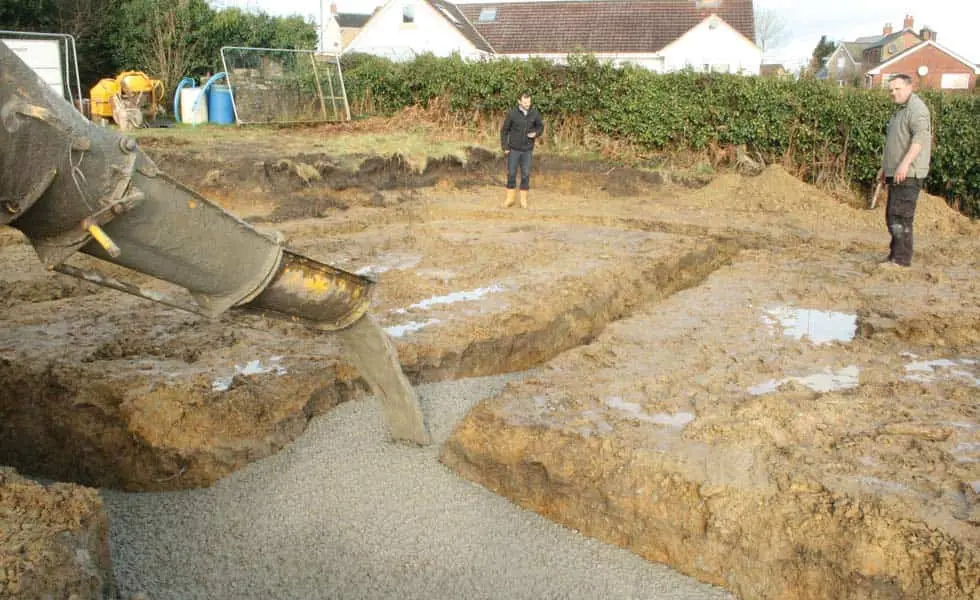
Yes. Every garage needs a foundation. A prefab concrete garage sits on a reinforced concrete slab; a brick garage is normally built off concrete trench foundations; a timber garage can use a slab, timber bearers or, for small buildings, a hardcore base. The foundation carries the weight, keeps the structure stable and blocks moisture from the ground.
What foundation does a concrete garage need?
A reinforced concrete slab. The slab spreads the weight of the precast panels evenly and gives the building a rigid, true platform, and for a sectional building, 'true' is the operative word. The base must be flat and level, with very little tolerance for inaccuracy, because every panel joint depends on it.
This is why we lay bases ourselves. Nucrete's concrete base laying service produces a slab to the exact specification the building needs, with a damp proof membrane included, so when the installation team arrives, the garage goes up in around a day on a base we know is right.
What foundation does a brick garage need?
A brick garage is typically built off concrete trench foundations, trenches dug beneath the wall lines and filled with concrete, giving the brickwork a solid footing to rise from. In certain circumstances a slab foundation is used instead. Either way, the foundation is a construction project in its own right, which is part of why a brick garage takes weeks where a sectional building takes a day.
Do timber garages need foundations too?
Yes, though timber allows more variety. A timber garage may be built on a concrete slab, or on timber bearers placed on prepared ground. For smaller timber buildings a compacted hardcore base can be sufficient; larger structures need proper support, usually a concrete slab. Skipping the groundwork is the classic timber-building mistake. It's how doors go out of square and floors go spongy.
Why does the foundation matter so much?
The foundation is doing four jobs at once. It keeps the building stable and resists settling and shifting over time. It distributes the structure's load so no point takes concentrated pressure. It acts as a barrier against moisture rising from the ground, with a damp proof membrane doing the heavy lifting. And it underpins compliance and safety: a building is only as sound as what it stands on.
Get the base right and everything above it behaves for decades. Get it wrong and no building (concrete, brick or timber) can compensate.
Our concrete base laying service takes the whole problem off your hands: one team, one specification, base and building from the same company. See the buildings these bases are built for, or read do concrete garages get damp? for why the membrane under the slab matters.
Can Nucrete lay the base for my garage?
Yes. Concrete base laying is one of our core services. We lay the slab to the exact specification your building needs, damp proof membrane included, so base and building are guaranteed to match.
Can I put a new concrete garage on an existing base?
Sometimes. It depends on whether the old base is flat, level, sound and the right size for the new building. Send us the dimensions and some photos and we'll tell you honestly whether it will do.
How flat does the base need to be for a concrete garage?
Very. A sectional building needs a flat, level base with very little tolerance for inaccuracy, because the panel joints and door openings all depend on it.
Does the base stop damp coming up into the garage?
A properly laid base does: the damp proof membrane beneath the slab blocks ground moisture from rising into the building, which is one of the main causes of damp in garages.
In short: every garage needs a foundation, and which kind depends on what the garage is made of. A prefab concrete garage sits on a reinforced concrete slab, a brick garage is normally built off concrete trench foundations, and a timber garage can use a slab, timber bearers or, for small buildings, compacted hardcore. The foundation does four jobs at once: it keeps the building stable against settling, spreads the load so no point takes concentrated pressure, blocks moisture rising from the ground by way of a damp proof membrane, and gives the structure the true surface it needs to be safe. Sectional concrete buildings are the least forgiving of the three, because every panel joint and door opening depends on the slab being flat and level within very little tolerance. Nucrete lays bases to the exact specification of the building going on them, damp proof membrane included, and installs most garages in around a day once the base has cured, one company answerable for both halves of the job.
Written and reviewed by the Nucrete team. Nucrete has manufactured concrete garages in its Bradford factory for over 45 years and lays bases with its own teams. Call free on 0800 849 9036.