
2 November 2023 · Sharon Winson
Breeze block garage cost: blockwork vs prefab compared
Block, brick, timber or concrete sectional? We compare all four ways to build a garage (honestly, pros and cons) to find the cheapest that lasts.
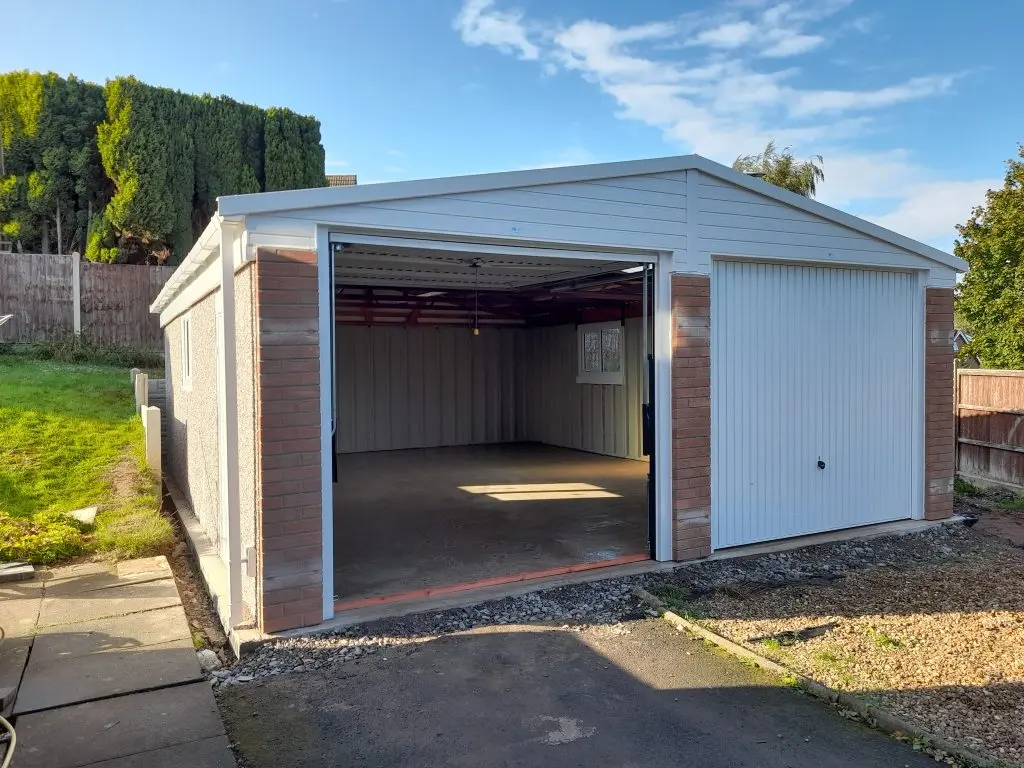
A breeze block garage costs more than most people expect, because the blocks are the cheap part: the real money goes on the bricklayer's labour, the foundations, the roof built on site, and the render or cladding a bare block wall needs to look finished. That's why, once everything is counted, a factory-made concrete sectional garage usually works out cheapest for a permanent building, assembled on your base in around a day instead of weeks.
Here's how the four ways to build a garage honestly compare.
What does a breeze block garage really cost?
Working out a blockwork quote is mostly working out labour. A block garage is a full on-site build: footings dug and poured, courses laid over days or weeks, a roof structure carpentered on top, then rendering or cladding because bare blockwork isn't a finished look. Materials are the smallest line on the bill, which is why block garage quotes vary so much between builders while the blocks themselves cost much the same everywhere.
Blockwork does have real strengths: good thermal mass, solid longevity, and it can be built to any shape. If you already have a builder you trust and an awkward site, it's a legitimate route. It just isn't the cheap one.
Why does a concrete sectional garage cost less than blockwork?
With a concrete sectional double garage, the expensive part of construction, building the walls, happens in a factory, not in your garden. Nucrete casts the panels in our Bradford factory, delivers them, and our own teams bolt the building together on your prepared base, typically in around a day. You pay for hours of installation rather than weeks of bricklaying.
The trade-offs are honest ones. Bare concrete panels are plainer than brick, though brick-effect fronts and uPVC fascias close most of the gap. And like any unheated outbuilding, a concrete garage can suffer condensation without ventilation or insulation. Neither changes the economics: for a permanent double garage, concrete sectional is the value option, and every Nucrete price includes VAT, delivery and installation.
How much more does a brick double garage cost?
A brick double garage is the most expensive route. It's built by hand on site, so you're paying for skilled labour over an extended build, plus scaffolding and weather delays. What you get in return is the classic matched-to-your-house look and real durability, though even brick needs occasional repointing over its life. If the budget question matters enough that you're reading this, brick is rarely the answer.
Is block cheaper than brick?
Yes. Blocks are bigger and faster to lay than bricks, so a block garage costs less than a brick one for the same footprint. That's the honest middle ground: cheaper than brick, dearer than sectional, and still a full on-site build with the render bill at the end. If the matched-to-your-house look matters more than the price, brick or a rendered block build earns its money; if the budget leads, neither gets close to a sectional building.
Are timber double garages cheap?
Timber double garages vary enormously with the quality of the wood. A cheap softwood building and a heavy oak frame are different products at different prices. Timber looks natural and is easy to modify later, but it demands regular treatment and won't match concrete or brick for lifespan. Factor maintenance into the true cost before calling a timber building cheap.
What should you decide before you build?
Two things. First, how the space will actually be used (cars, workshop, storage, or some mix), because that decides the size and doors you need, and going slightly bigger now is far cheaper than replacing an undersized garage later. Second, whether your site needs planning permission; most don't, but our guide to whether your garage needs planning permission covers the exceptions. For the numbers themselves, our concrete garage prices page gives exact double garage prices for your postcode area, VAT, delivery and installation included. And for a breakdown of everything that goes into a build, see how much it costs to build a garage.
How much does a breeze block garage cost?
It depends almost entirely on labour, which is why quotes vary so much between builders. Budget for footings, days of blocklaying, a site-built roof and then render or cladding to finish the walls. The blocks themselves are the cheapest part of the job. A factory-made sectional garage removes most of that labour, which is why it usually undercuts blockwork.
Is a breeze block garage cheaper than a prefab concrete one?
Not usually, once the whole job is priced. Blockwork is a full on-site build with a rendered finish on top; a prefab sectional garage arrives as factory-made panels and is installed in around a day, with the price including VAT, delivery and installation.
What is the cheapest double garage that will last?
A concrete sectional double garage. The panels are factory-made and installed in around a day, the building needs minimal maintenance, and every Nucrete garage carries a 10-year structural guarantee.
Can a concrete double garage look like brick?
Yes. Brick-effect fronts and uPVC fascias are available across the Nucrete range, so the garage blends with your house without the cost of a full brick build.
How quickly can a concrete sectional double garage be built?
On a prepared base, most double garages are installed in around a day by Nucrete's own installation teams.
Do concrete garages get condensation?
Any unheated outbuilding can. Good ventilation prevents most of it, and insulation options are available if you plan to spend time working in the garage.
Is blockwork or brickwork better for a garage?
Blocks are larger and faster to lay, so a block garage costs less than a brick one for the same footprint, but bare blockwork needs rendering or cladding to look finished, which brick doesn't. Brick matches a house better and is the premium look; block is the cheaper on-site build. Neither approaches a factory-made sectional garage on price.
Do I need planning permission for a double garage?
Usually not. A garage that sits behind the front of the house, stays within the height limits and leaves more than half the land around the original house uncovered normally falls under permitted development. There's no floor-area limit in the planning rules; the 30 square metres often quoted is a separate building regulations threshold. Listed buildings and conservation areas are the main exceptions, so check first if either applies.
In short: a breeze block garage costs more than most people expect, because the blocks are the cheapest part of the job. The money goes on the bricklayer's labour over days or weeks, the footings, a roof carpentered on site, and the render or cladding that bare blockwork needs to look finished, which is why block quotes vary so widely between builders when the materials cost much the same everywhere. Block is cheaper than brick, because blocks are larger and faster to lay, and dearer than a factory-made sectional building. Timber varies enormously with the quality of the wood and needs regular treatment, so maintenance belongs in its true cost. A concrete sectional double garage is usually the cheapest permanent option, because the walls are built in a factory rather than in your garden: Nucrete casts its panels in Bradford and its own teams bolt the building together on a prepared base, typically in around a day, with VAT, delivery and installation in the price and a 10-year structural guarantee. The honest trade-offs are that bare concrete panels look plainer than brick, though brick-effect fronts and uPVC fascias close most of that gap, and that any unheated outbuilding can suffer condensation without ventilation or insulation.
Written and reviewed by the Nucrete team. Nucrete has manufactured prefab concrete garages in its Bradford factory for over 45 years. Call free on 0800 849 9036.