
20 May 2025 · Sharon Winson
Concrete Base for a Shed: Why a Solid Foundation Matters
A shed is only as good as what it stands on. Here's why concrete beats every other shed base, and how our base teams build one properly.
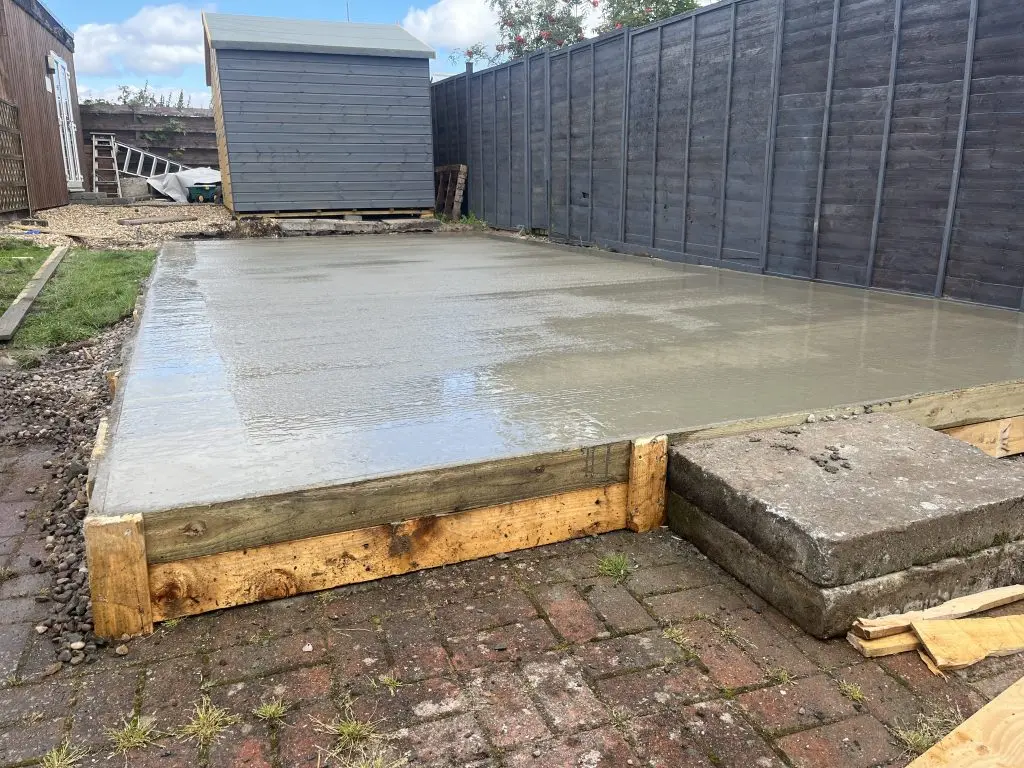
A concrete base is the best foundation you can give a garden shed. It won't rot, sink or shift, it keeps damp and pests out from underneath, and it gives the building a flat, level platform, which is what keeps doors and windows opening properly for the life of the shed.
Why choose a concrete base for a shed?
A concrete base outlasts every alternative because it's a permanent, solid slab rather than a surface that can move. Timber bearers rot, slabs settle unevenly, and plastic grids flex. Concrete does none of those things.
Just as important is what a level base does for the building itself. A shed built on a flat, true slab stays square, so the doors swing freely and the windows don't jam. Build the same shed on an uneven base and the frame twists, and no amount of adjustment afterwards fully fixes it. After 45+ years of supplying garden buildings, we can usually tell from the doorway whether a building went up on a good base.
What goes underneath? The MOT Type 1 sub-base
Under the concrete itself sits a compacted layer of MOT Type 1 hardcore, the sub-base. This crushed-stone layer gives the slab a firm, evenly compacted platform to sit on and helps water drain away rather than pooling beneath the concrete.
It's the part of the job nobody sees, and it's also the part that decides whether the slab is still flat in twenty years. A base poured straight onto soft or uneven ground will settle and crack; a base on properly compacted Type 1 stays put.
Do you need a DPM and insulation under a shed base?
If you plan to use the concrete slab as the finished floor of the shed (as a workshop floor, for example). It's worth adding a heavy-duty damp proof membrane (DPM) before the concrete is poured. The DPM stops ground moisture rising through the slab, keeping the floor and everything stored on it dry.
For a shed that will be heated or used year-round, rigid PIR insulation boards (brands such as Celotex or Kingspan) can be laid within the base build-up as well. That turns a cold slab into a floor that holds its temperature. A small addition at build time that you can't easily retrofit later.
How our base teams build a shed base
Every base we lay follows the same sequence:
• Site preparation. We assess the ground, clear the area and level it. • Sub-base: MOT Type 1 hardcore is laid and mechanically compacted. • DPM and insulation: fitted at this stage if the job calls for them. • The pour: concrete is poured, levelled and smoothed off. • Finishing: final checks so the slab is ready for the building.
Where the job needs it, steel mesh reinforcement can be added before the pour, and edges can be finished with a slope to shed rainwater away from the building.
You can read more about how we work on our concrete base laying service page. We lay bases for sheds, garages and garden rooms across the UK, using our own teams rather than subcontractors. When you're ready for a price, ask us for a concrete base quote and we'll come back to you with a fully inclusive figure. If you're still choosing the building itself, our concrete sheds and workshops are a good place to start.
Shed base questions, answered
Is a concrete base better than paving slabs for a shed?
For anything you want to last, yes. Paving slabs can settle unevenly over time, which twists the shed frame and jams doors. A concrete slab on a compacted MOT Type 1 sub-base stays flat and level for the life of the building.
What stops damp coming up through a concrete shed base?
A heavy-duty damp proof membrane (DPM) laid before the concrete is poured. It's essential if you'll use the slab as the finished floor. It keeps ground moisture out of the shed and off anything stored inside.
Can a shed base be insulated?
Yes. Rigid PIR insulation boards can be built into the base before the pour. It's worth doing if the shed will be heated or used as a workshop, because insulation is very hard to add underneath a slab later.
Do you lay the base as well as supply the shed?
Yes. Nucrete has its own base laying teams, so one company handles the ground work and the building. That means the base is guaranteed to suit the shed that's going on it.
In short: a concrete base is the best foundation for a garden shed, because it won't rot, sink or shift the way timber bearers, paving slabs and plastic grids do. What it gives the building matters as much as what it resists: a shed on a flat, true slab stays square, so the doors swing and the windows don't jam, while the same shed on an uneven base twists at the frame and never fully comes right afterwards. Under the concrete goes a compacted layer of MOT Type 1 hardcore, the part nobody sees and the part that decides whether the slab is still flat in twenty years. If the slab will be the finished floor, add a heavy-duty damp proof membrane before the pour to stop ground moisture rising, and for a heated or year-round building add rigid PIR insulation boards within the build-up. Neither can easily be retrofitted under a slab later. Steel mesh reinforcement can go in before the pour where the job needs it, and edges can be finished with a slope to shed rainwater away from the building. Nucrete lays bases for sheds, garages and garden rooms across the UK with its own teams rather than subcontractors, so one company is answerable for the ground work and the building on it.
Written and reviewed by the Nucrete team. Nucrete has supplied garden buildings for over 45 years and lays bases with its own teams. Call free on 0800 849 9036.